Ingredient · Ayurvedic
Tulsi ayurvedic manufacturer in India
At Vynza, we manufacture Tulsi into tablets, capsules, syrups and oral liquids, oral drops, powders, sachets, Ayurvedic oils and balms for brands at our facility in Mohali, Punjab, and it appears in 20 of our ready formulations.
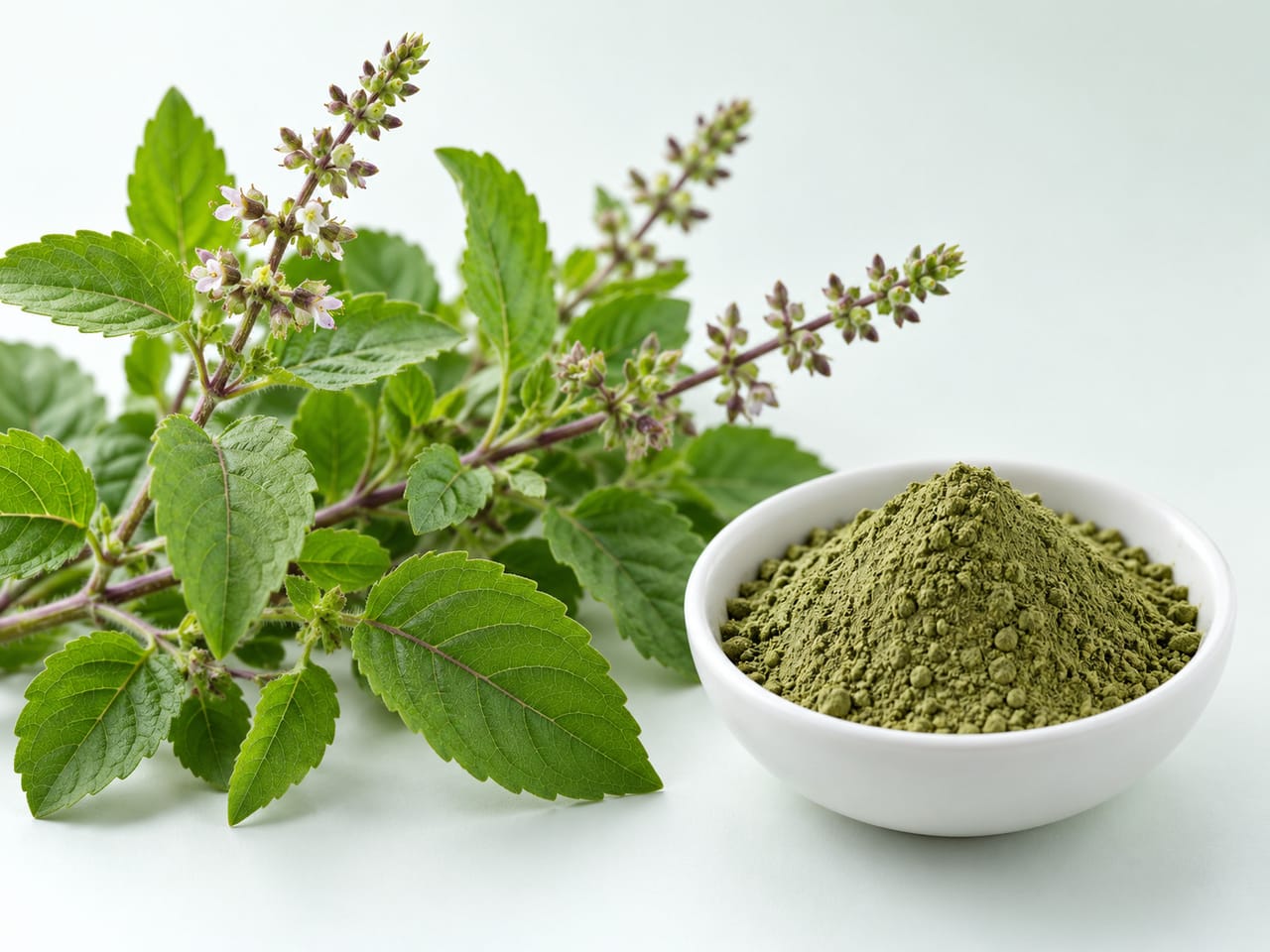
- Ingredient
- Tulsi (Ocimum sanctum)
- Licence track
- Ayurvedic (AYUSH)
- Dosage forms
- Tablets, Capsules, Syrups and oral liquids, Oral drops, Powders, Sachets, Ayurvedic oils and balms
- FSSAI schedules
- Schedule II, entry 276
- In our library
- 20 formulations
What Tulsi is
Tulsi, or holy basil, is a sacred aromatic plant grown in many Indian homes, and its leaves are the part used. It is traditionally used in Ayurveda to support respiratory wellbeing and the body’s natural defences. Several types are traded, such as Rama, Kala and Lemon Tulsi, and our Tulsi drops blend them. We also use it in syrups and tablets, often with Vasaka and Mulethi.
Tulsi and the regulations
Our nutraceutical products are made under FSSAI’s 2016 Health Supplements and Nutraceuticals Regulations, as operationalised through FSSAI’s 2022 directions (latest re-operationalisation 30 August 2024, under Section 16(5)).
Tulsi is listed by name, as Ocimum sanctum L. (Now known as Ocimum tenuiflorum L.), in Schedule II (plant or botanicals), entry 276, of the schedules set out in FSSAI’s direction of 18 October 2022 (page 42).
In our Ayurvedic products, Tulsi is used under our AYUSH manufacturing licence, under the Drugs and Cosmetics Act, 1940, and its Rules of 1945.
Mainly an Ayurvedic ingredient, used in oral and topical products made under AYUSH. Permitted for nutraceutical use: it is listed by name in the schedules cited above.
Dosage forms we make Tulsi in
Tablets, Capsules, Syrups and oral liquids, Oral drops, Powders, Sachets, Ayurvedic oils and balms.
Its aroma comes from volatile oils that are lost with prolonged heat, so we control temperature in syrups. Leaf extract is hygroscopic and mildly pungent. Drops use a concentrated liquid extract that stays clear in the bottle.
Choosing your Tulsi grade
Tulsi comes as dried leaf powder, aqueous extract, hydroalcoholic extract or steam-distilled leaf oil. Drops need a liquid extract or concentrate, while tablets and capsules use dry extract standardised to ursolic acid or eugenol. Rama and Kala (Krishna) Tulsi are both Ocimum sanctum, with green and purple leaves, whereas Lemon Tulsi and some other types belong to related Ocimum species, so a multi-Tulsi product names each on the specification. Leaf should be shade-dried to keep its volatile oil.
Tulsi on the label
Declared as Ocimum sanctum leaf, or leaf extract, alongside the name Tulsi in Ayurvedic products. Where drops blend several Tulsi types, each is listed by its own name and botanical source.
How brands use Tulsi
Tulsi is the name shoppers look for in an immunity or cough product. Our Tulsi Drops blend several Tulsi types in a small dropper bottle, a format that suits online and chemist sales, while the Tulsi Tablet is a single-herb product. It also supports cough syrups for adults and children and throat tablets. Buyers are Ayurvedic brands, direct-to-consumer wellness brands that want a quick, recognisable launch, and FMCG-style brands entering herbal drops.
Our formulations with Tulsi
- Tulsi Drops (VZ-AY-001) · Oral drops
- Tulsi Drop (VZ-IM-023) · Oral drops
- Papaya Leaf Extract (VZ-AY-010) · Tablets
- Platelet Enhancer (Ayurveda) (VZ-AY-012) · Tablets
- Tulsi Tablet (VZ-AY-018) · Tablets
- Sore Throat Relief Drops (VZ-IM-028) · Tablets
- Hair Capsules (Ayurveda) (VZ-SH-016) · Capsules
- Bronchial Support Syrup (Ayurveda) (VZ-AY-020) · Syrups and oral liquids
- Platelet Syrup (Ayurveda) (VZ-AY-024) · Syrups and oral liquids
- Kids Cough Relief Syrup (VZ-IM-031) · Syrups and oral liquids
- Kids Cough Relief Syrup (Ayurveda) (VZ-PD-055) · Syrups and oral liquids
- Ayurveda Weight Manager (VZ-DC-016) · Tablets
- Gastro Immunity Powder (VZ-DG-012) · Sachets
- Immunity Powder Ayurveda (VZ-IM-034) · Sachets
- Platelet + Immunity Drink (VZ-AY-029) · Syrups and oral liquids
- Giloy + Tulsi + Amla Juice (VZ-IM-035) · Syrups and oral liquids
- Hair Oil (Bhringraj Classic) (VZ-SH-018) · Ayurvedic oils and balms
- Herbal Cooling Oil (Classic) (VZ-SH-019) · Ayurvedic oils and balms
- Hair Care Oil (Ayurveda) (VZ-SH-021) · Ayurvedic oils and balms
- Herbal Cooling Oil (Light) (VZ-AY-039) · Ayurvedic oils and balms
Check the vitamins and minerals in the same formula with our FSSAI formulation checker, or browse all ingredients: Trivrit · Turmeric.
FAQ
Questions about Tulsi
Which dosage forms can you make Tulsi in?
Tablets, Capsules, Syrups and oral liquids, Oral drops, Powders, Sachets, Ayurvedic oils and balms. We confirm the format that suits your dose, taste and pack at proposal stage.
Is Tulsi allowed in products made in India?
Tulsi is listed by name, as Ocimum sanctum L. (Now known as Ocimum tenuiflorum L.), in Schedule II (plant or botanicals), entry 276, of the schedules set out in FSSAI’s direction of 18 October 2022 (page 42). In our Ayurvedic products, Tulsi is used under our AYUSH manufacturing licence, under the Drugs and Cosmetics Act, 1940, and its Rules of 1945.
Which of your formulations use Tulsi?
Tulsi Drops (VZ-AY-001), Tulsi Drop (VZ-IM-023), Papaya Leaf Extract (VZ-AY-010), Platelet Enhancer (Ayurveda) (VZ-AY-012), Tulsi Tablet (VZ-AY-018), Sore Throat Relief Drops (VZ-IM-028), and 14 more listed on this page.
What is Tulsi usually combined with?
In our library it is most often paired with Amla, Giloy, Mulethi, Ashwagandha.
Can you work with a specific Tulsi grade or a branded ingredient?
Yes. Tell us the grade, standardisation or branded ingredient you want. For a branded grade we source the genuine branded ingredient from the brand owner or its distributors, with the brand’s certificate of analysis.
How fast can you make a product with Tulsi?
A formulation proposal within 48 hours, a bench sample within 10 days of a signed brief, and dispatch within 30 days of artwork and advance approval for a standard batch.
Make your Tulsi product with us.
Tell us the format and the customer; we reply with a formulation proposal within 48 hours.
Updated on