Tablet line at a glance
- Tablet types
- Uncoated, film-coated, chewable, effervescent, sustained-release; Ayurvedic tablets, vatis and lozenges
- Process
- Granulation or direct compression, chosen per formula; film coating where the product needs it
- Typical actives
- Multivitamins, minerals, botanical extracts, branded ingredients, Ayurvedic formulations
- In-process checks
- Weight, hardness, thickness, friability, disintegration
- Batch release
- Identity, assay, moisture, microbial and heavy-metal testing; certificate of analysis
- Packing
- Bottles and jars with induction seal and batch coding; blister and strip packing
- Timeline
- Proposal 48 hours · bench sample 10 days · dispatch 30 days from artwork and advance approval
Tablets we manufacture
We make them from our 350+ ready formulations or your own formula.
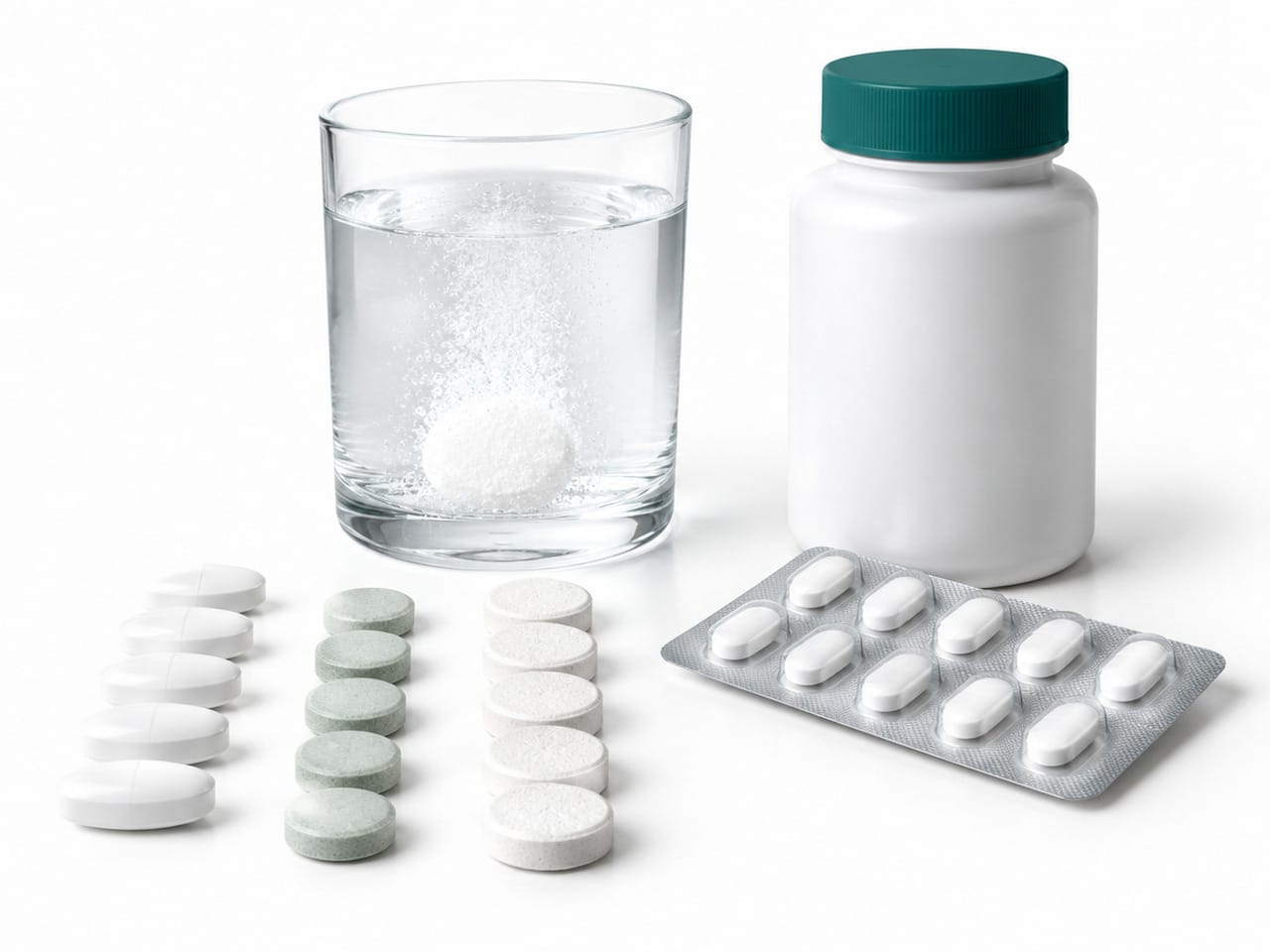
- Film-coated tablets for multivitamins, minerals, botanicals and branded ingredients, where the coat masks taste and odour, protects the core from moisture and gives your product its colour.
- Chewable tablets for children’s and adult nutrition when a customer does not want to swallow a tablet, with flavour and sweetener systems developed at bench stage.
- Effervescent tablets for vitamin C, electrolytes and multivitamins taken in water, compressed in humidity-controlled conditions and packed to keep moisture out.
- Sustained-release tablets for actives where a slower release over several hours suits the product.
- Ayurvedic tablets and vatis made to AYUSH-GMP standards from classical and proprietary formulations.
Why brands choose tablets
A tablet carries a high dose in a small, stable unit. It travels well, keeps well and suits a subscription, a pharmacy shelf or a bottle on the kitchen counter. Multivitamins, calcium with vitamin D3, B-complex, iron with folic acid, biotin and many botanical formulas suit a tablet because the dose per unit is high and the actives are stable in a dry, compressed form.
How we make a tablet
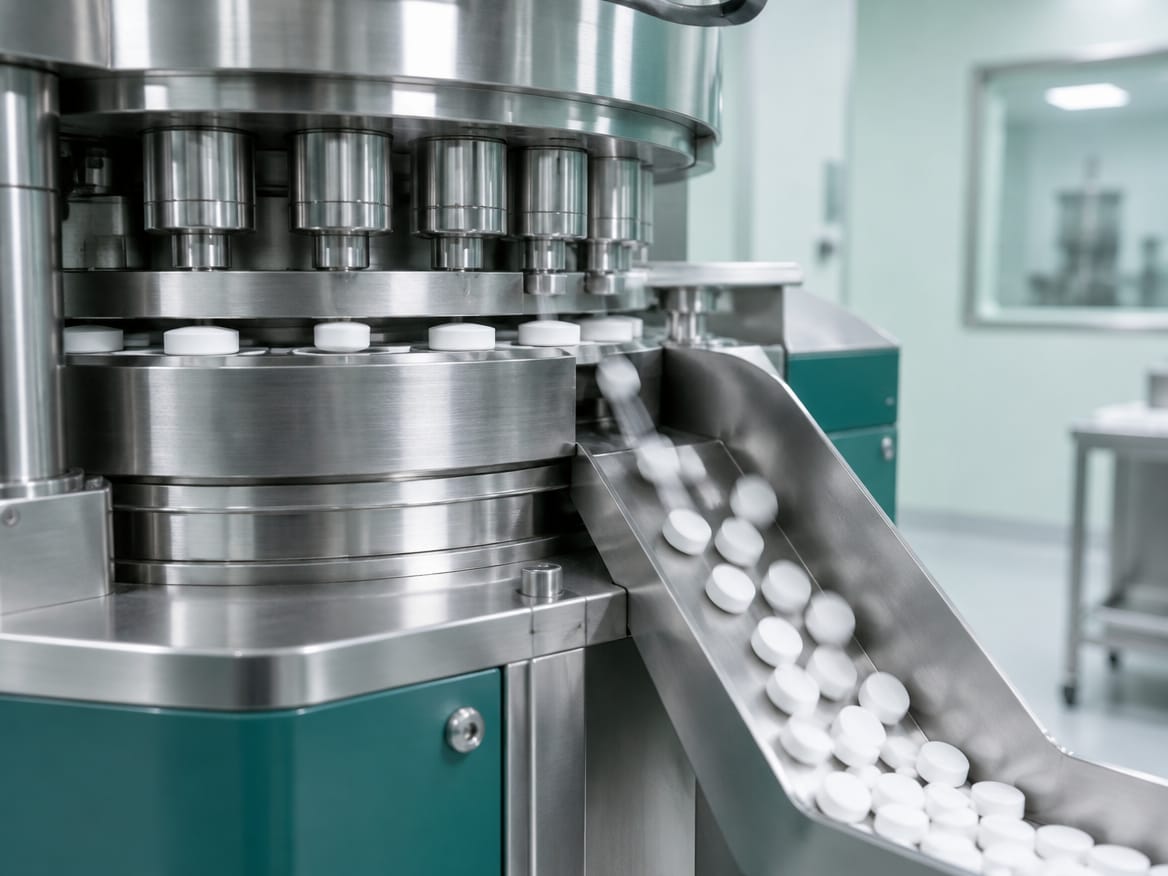
Every tablet starts with the formula: actives, excipients and the order they are combined in. We dispense and sift raw materials, then blend or granulate them depending on how the powder flows and compresses, and compress on tooling sized to the dose. Coating follows where it is needed. In-process checks for weight, hardness, thickness, friability and disintegration run through the batch, and the finished batch is released on identity, assay, moisture, microbial and heavy-metal testing with a certificate of analysis.
Tablet size and shape follow the dose. If a formula would need a tablet larger than customers are comfortable swallowing, we say so at proposal stage and suggest two tablets per serving, a capsule, a change of ingredient or a move to a powder or liquid format.
Packaging and labelling
We fill tablets into bottles and jars with induction seals and batch coding, and pack cartons with your artwork. Effervescent tablets are packed to keep moisture out, because they lose their fizz when they absorb water. Your label is reviewed against FSSAI labelling rules before it goes to print, including the dose per tablet, the serving instructions and the advisory statements nutraceutical labels must carry.
From brief to dispatch
A formulation proposal within 48 hours, a bench sample within 10 days of a signed brief, and dispatch within 30 days of artwork and advance approval for a standard batch. Tablet formulations in our library are available as white label products or adjusted to your plan under private label, and every tablet we make sits within our wider contract manufacturing service.
Updated on