Ingredient · Ayurvedic and Nutraceutical
Amla supplement manufacturer in India
At Vynza, we manufacture Amla into tablets, capsules, syrups and oral liquids, powders, sachets, Ayurvedic oils and balms for brands at our facility in Mohali, Punjab, and it appears in 29 of our ready formulations.
- Ingredient
- Amla (Emblica officinalis)
- Licence track
- Ayurvedic (AYUSH), Nutraceutical (FSSAI)
- Dosage forms
- Tablets, Capsules, Syrups and oral liquids, Powders, Sachets, Ayurvedic oils and balms
- FSSAI schedules
- Schedule II, entry 169
- In our library
- 29 formulations
What Amla is
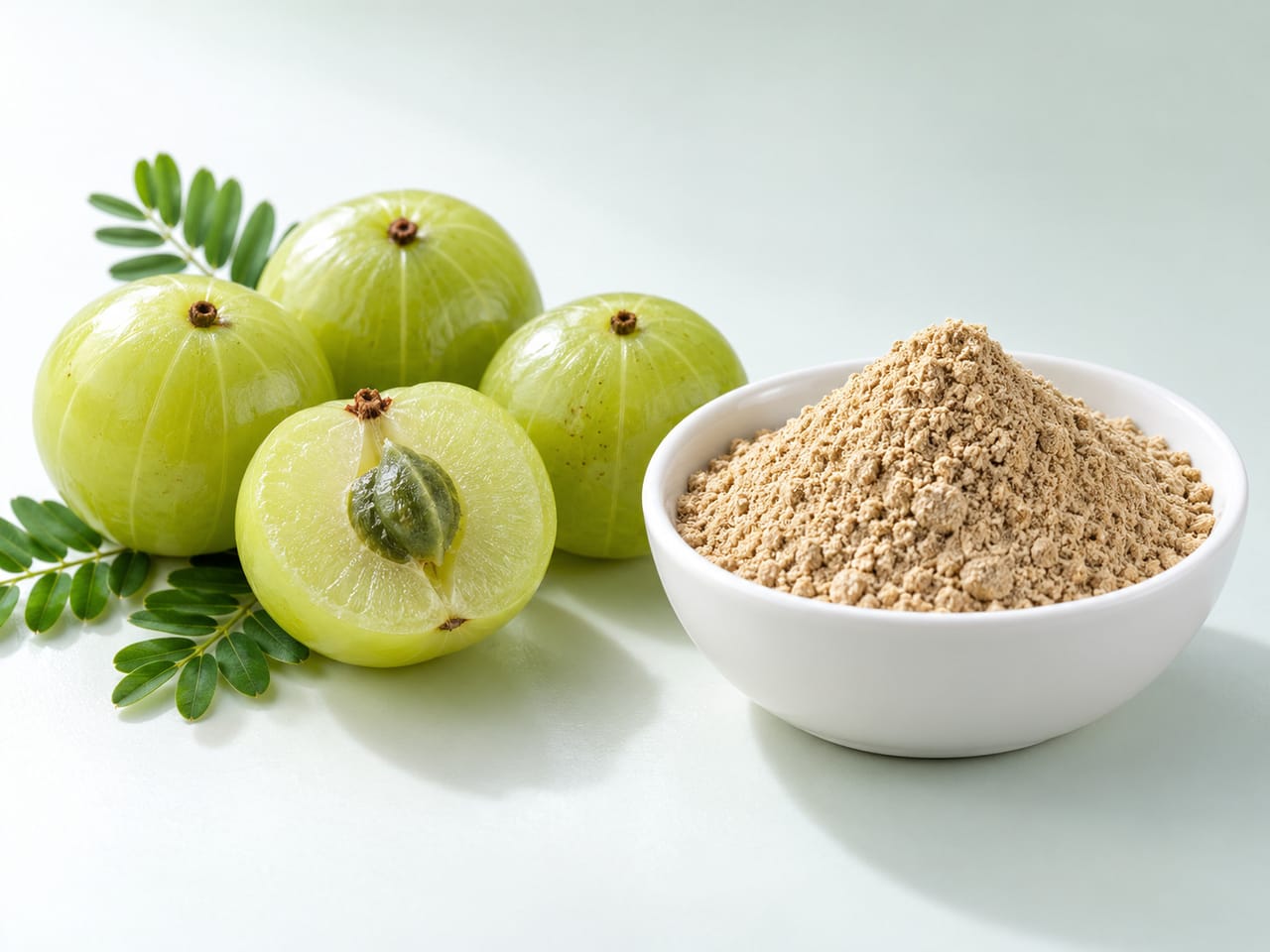
Amla is the fruit of Emblica officinalis, also called Indian gooseberry, and a natural source of vitamin C and tannins. Known in Ayurveda as Amalaki, it is a Rasayana herb, part of Triphala and the base of Chyawanprash. Formulators use it in immunity, hair, skin and digestive ranges, and in hair oils, as a familiar Indian botanical that supports general wellbeing.
Amla and the regulations
Our nutraceutical products are made under FSSAI’s 2016 Health Supplements and Nutraceuticals Regulations, as operationalised through FSSAI’s 2022 directions (latest re-operationalisation 30 August 2024, under Section 16(5)).
Amla is listed by name, as Emblica officinalis Gaertn. (Now known as Phyllanthus emblica L.), in Schedule II (plant or botanicals), entry 169, of the schedules set out in FSSAI’s direction of 18 October 2022 (page 34).
In our Ayurvedic products, Amla is used under our AYUSH manufacturing licence, under the Drugs and Cosmetics Act, 1940, and its Rules of 1945.
Used in both tracks: Ayurvedic products made under an AYUSH licence, including classical preparations, and FSSAI health supplements and nutraceuticals that use the fruit or a standardised extract.
Dosage forms we make Amla in
Tablets, Capsules, Syrups and oral liquids, Powders, Sachets, Ayurvedic oils and balms.
Sour and astringent, so syrups and powders need flavour balancing. Amla extract is hygroscopic and needs humidity control, and its natural vitamin C content declines with heat and long storage.
Choosing your Amla grade
Brands pick between three main grades. Dried fruit powder suits churnas, Triphala and classical tablets, and keeps the natural fibre of the fruit. Aqueous fruit extract is more concentrated and suits capsules, syrups and juices. Extracts standardised to tannins or to vitamin C suit nutraceutical tablets that carry a nutrient statement. We use deseeded fruit of Emblica officinalis, test tannin and vitamin C content on each lot, and pick a low-moisture, free-flowing grade for direct compression. For hair oils, fresh fruit or its juice is cooked into the oil.
Amla on the label
Declared as Amla (Emblica officinalis) fruit, as powder or as fruit extract with the extraction solvent stated. Vitamin C content is declared only when the extract is standardised and tested for it.
How brands use Amla
Amla appears in more of our formulations than almost any other herb. Ayurvedic brands use it as a single-herb tablet, such as Amla Pure, inside Triphala Classical and the Chyawanprash Capsule, and in acidity, diabetic wellness and hair care tablets. Nutraceutical brands pair it with biotin and collagen in hair and skin products, as in Biotin Collagen Amla. Juice brands sell it alone or with aloe and karela. Buyers span Ayurvedic brands, direct-to-consumer wellness labels, pharmacy brands and export buyers of Indian botanicals.
Our formulations with Amla
- Biotin Collagen Amla (VZ-SH-002) · Tablets
- Amla Pure (VZ-AY-002) · Tablets
- Gastro Acidity Relief (Herbal Probiotic) (VZ-DG-015) · Tablets
- Platelet + Fiber (VZ-AY-011) · Tablets
- Platelet Enhancer (Ayurveda) (VZ-AY-012) · Tablets
- Triphala Classical (VZ-AY-017) · Tablets
- Blood Sugar Support (Ayurveda) (VZ-DC-010) · Tablets
- Diabetic Wellness (Ayurveda) (VZ-DC-012) · Tablets
- Acidity Care (Herbal Probiotic) (VZ-DG-004) · Tablets
- Chyawanprash Capsule (VZ-IM-025) · Capsules
- Hair Capsules (Ayurveda) (VZ-SH-016) · Capsules
- Renal Tablet (Ayurveda) (VZ-UK-015) · Tablets
- Amenorrhoea Support (VZ-WH-015) · Tablets
- Eye Syrup (Kids) (VZ-EC-006) · Syrups and oral liquids
- Appetite Stimulant Ayurveda (VZ-DG-008) · Syrups and oral liquids
- Immunity Syrup Ayurveda (VZ-IM-030) · Syrups and oral liquids
- Liver Support Tonic (Ayurveda) (VZ-LC-014) · Syrups and oral liquids
- Women’s Wellness Tonic (Ayurveda) (VZ-WH-020) · Syrups and oral liquids
- Menstrual Comfort (Ayurveda) (VZ-WH-021) · Syrups and oral liquids
- Gastro Immunity Powder (VZ-DG-012) · Sachets
- Immunity Powder Ayurveda (VZ-IM-034) · Sachets
- Amla Juice (VZ-AY-026) · Syrups and oral liquids
- Amla Wheatgrass Juice (VZ-AY-027) · Syrups and oral liquids
- Platelet + Immunity Drink (VZ-AY-029) · Syrups and oral liquids
- Wheatgrass Pure (VZ-AY-032) · Syrups and oral liquids
- Amla Karela Juice (VZ-DC-018) · Syrups and oral liquids
- Giloy + Tulsi + Amla Juice (VZ-IM-035) · Syrups and oral liquids
- Hair Oil (Bhringraj Classic) (VZ-SH-018) · Ayurvedic oils and balms
- Hair Care Oil (Ayurveda) (VZ-SH-021) · Ayurvedic oils and balms
Check the vitamins and minerals in the same formula with our FSSAI formulation checker, or browse all ingredients: Amaltas · Apamarg.
FAQ
Questions about Amla
Which dosage forms can you make Amla in?
Tablets, Capsules, Syrups and oral liquids, Powders, Sachets, Ayurvedic oils and balms. We confirm the format that suits your dose, taste and pack at proposal stage.
Is Amla allowed in products made in India?
Amla is listed by name, as Emblica officinalis Gaertn. (Now known as Phyllanthus emblica L.), in Schedule II (plant or botanicals), entry 169, of the schedules set out in FSSAI’s direction of 18 October 2022 (page 34). In our Ayurvedic products, Amla is used under our AYUSH manufacturing licence, under the Drugs and Cosmetics Act, 1940, and its Rules of 1945.
Which of your formulations use Amla?
Biotin Collagen Amla (VZ-SH-002), Amla Pure (VZ-AY-002), Gastro Acidity Relief (Herbal Probiotic) (VZ-DG-015), Platelet + Fiber (VZ-AY-011), Platelet Enhancer (Ayurveda) (VZ-AY-012), Triphala Classical (VZ-AY-017), and 23 more listed on this page.
What is Amla usually combined with?
In our library it is most often paired with Giloy, Tulsi, Bhringraj, Mulethi.
Can you work with a specific Amla grade or a branded ingredient?
Yes. Tell us the grade, standardisation or branded ingredient you want, such as Capros. For a branded grade we source the genuine branded ingredient from the brand owner or its distributors, with the brand’s certificate of analysis.
How fast can you make a product with Amla?
A formulation proposal within 48 hours, a bench sample within 10 days of a signed brief, and dispatch within 30 days of artwork and advance approval for a standard batch.
Make your Amla product with us.
Tell us the format and the customer; we reply with a formulation proposal within 48 hours.
Updated on