Ingredient · Ayurvedic and Nutraceutical
Shatavari supplement manufacturer in India
At Vynza, we manufacture Shatavari into tablets, capsules, syrups and oral liquids, powders, sachets, stick packs for brands at our facility in Mohali, Punjab, and it appears in 17 of our ready formulations.
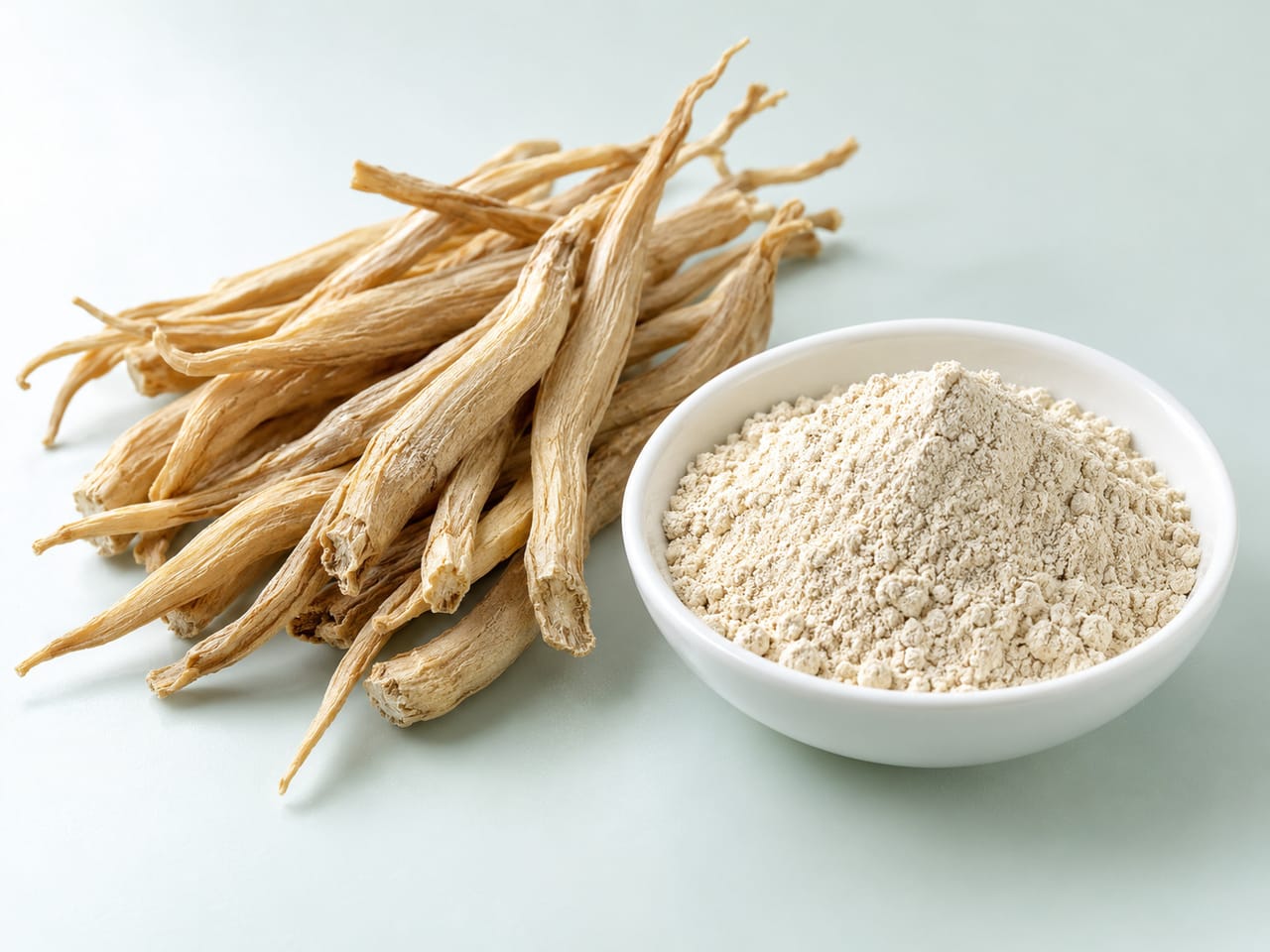
- Ingredient
- Shatavari (Asparagus racemosus)
- Licence track
- Ayurvedic (AYUSH), Nutraceutical (FSSAI)
- Dosage forms
- Tablets, Capsules, Syrups and oral liquids, Powders, Sachets, Stick packs
- FSSAI schedules
- Schedule II, entry 46
- In our library
- 17 formulations
What Shatavari is
Shatavari is the tuberous root of Asparagus racemosus, a climbing plant of Indian forests. In Ayurveda it is a rasayana for women, traditionally used to support female reproductive wellbeing, lactation and strength, and its cooling, nourishing nature also gives it a place in digestive and vitality formulas. We use it in Ayurvedic tablets, capsules, syrups and powders, and in one nutraceutical capsule for hormonal balance.
Shatavari and the regulations
Our nutraceutical products are made under FSSAI’s 2016 Health Supplements and Nutraceuticals Regulations, as operationalised through FSSAI’s 2022 directions (latest re-operationalisation 30 August 2024, under Section 16(5)).
Shatavari is listed by name, as Asparagus racemosus Willd, in Schedule II (plant or botanicals), entry 46, of the schedules set out in FSSAI’s direction of 18 October 2022 (page 26).
In our Ayurvedic products, Shatavari is used under our AYUSH manufacturing licence, under the Drugs and Cosmetics Act, 1940, and its Rules of 1945.
Used in both tracks: in Ayurvedic products made under AYUSH, and as a botanical in nutraceuticals made under FSSAI, as in our Hormonal Balance capsule. Permitted for nutraceutical use: it is listed by name in the schedules cited above.
Dosage forms we make Shatavari in
Tablets, Capsules, Syrups and oral liquids, Powders, Sachets, Stick packs.
Root powder is sticky and absorbs moisture quickly because of its mucilage and saponins, so blending and filling run at controlled humidity. Extract granules suit tablets and stick packs. In syrups it adds body and a mildly sweet, slightly bitter note that sits well in a jaggery or sugar base.
Choosing your Shatavari grade
Brands choose between whole root powder and an extract. Root powder is the classical form for churna and Ayurvedic tablets. Aqueous or hydroalcoholic extracts, standardised to saponins such as shatavarins, suit capsules and nutraceutical formulas that need a recognised marker on the specification. Roots should be peeled and dried soon after harvest; poorly dried root darkens and picks up microbial load, so we test microbiology on each lot. Cultivated sources from central India give steadier supply than wild collection.
Shatavari on the label
Declared as Asparagus racemosus root, or root extract, with the name Shatavari in Ayurvedic products. In nutraceutical packs the botanical name and plant part lead, with the green vegetarian symbol.
How brands use Shatavari
Women’s wellness is the core use. Our Women’s Wellness Tonic (Ayurveda) syrup and Anaemia and Lactation Support (Herbal Probiotic) tablet build on Shatavari, and it also appears in menstrual comfort, men’s muscle and kids’ focus formulas, as well as the Chyawanprash base. A single-herb Shatavari capsule or tablet suits a brand starting with one product. Buyers are Ayurvedic brands, women’s health direct-to-consumer brands, new-mother brands and gynaecologist-facing pharmacy brands, and its FSSAI use lets nutraceutical brands include it too.
Our formulations with Shatavari
- Hormonal Balance (VZ-WH-002) · Capsules
- Slim Tea Herbal (VZ-DC-014) · Tablets
- Fissure Care Capsule (VZ-DG-005) · Capsules
- Chyawanprash Capsule (VZ-IM-025) · Capsules
- Muscle Strength Ayurveda (VZ-MH-020) · Tablets
- Kids Focus and Calm (Herbal Probiotic) (VZ-PD-052) · Tablets
- Amenorrhoea Support (VZ-WH-015) · Tablets
- Anaemia and Lactation Support (Herbal Probiotic) (VZ-WH-016) · Tablets
- Herbal Blood Health Support with Probiotics (VZ-WH-017) · Tablets
- Leucorrhea Care (Ayurveda) (VZ-WH-019) · Tablets
- Platelet Syrup (Ayurveda) (VZ-AY-024) · Syrups and oral liquids
- Women’s Wellness Tonic (Ayurveda) (VZ-WH-020) · Syrups and oral liquids
- Menstrual Comfort (Ayurveda) (VZ-WH-021) · Syrups and oral liquids
- Energy Growth Powder Ayurveda (VZ-MH-022) · Sachets
- Lactation Ayurvedic (VZ-WH-022) · Powders
- Lactation Support Powder (VZ-WH-023) · Sachets
- Massage Oil (Daily) (VZ-AY-035) · Ayurvedic oils and balms
Check the vitamins and minerals in the same formula with our FSSAI formulation checker, or browse all ingredients: Shankhapushpi · Shilajit.
FAQ
Questions about Shatavari
Which dosage forms can you make Shatavari in?
Tablets, Capsules, Syrups and oral liquids, Powders, Sachets, Stick packs. We confirm the format that suits your dose, taste and pack at proposal stage.
Is Shatavari allowed in products made in India?
Shatavari is listed by name, as Asparagus racemosus Willd, in Schedule II (plant or botanicals), entry 46, of the schedules set out in FSSAI’s direction of 18 October 2022 (page 26). In our Ayurvedic products, Shatavari is used under our AYUSH manufacturing licence, under the Drugs and Cosmetics Act, 1940, and its Rules of 1945.
Which of your formulations use Shatavari?
Hormonal Balance (VZ-WH-002), Slim Tea Herbal (VZ-DC-014), Fissure Care Capsule (VZ-DG-005), Chyawanprash Capsule (VZ-IM-025), Muscle Strength Ayurveda (VZ-MH-020), Kids Focus and Calm (Herbal Probiotic) (VZ-PD-052), and 11 more listed on this page.
What is Shatavari usually combined with?
In our library it is most often paired with Ashwagandha, Bhringraj, Amla, Ashoka.
Can you work with a specific Shatavari grade or a branded ingredient?
Yes. Tell us the grade, standardisation or branded ingredient you want. For a branded grade we source the genuine branded ingredient from the brand owner or its distributors, with the brand’s certificate of analysis.
How fast can you make a product with Shatavari?
A formulation proposal within 48 hours, a bench sample within 10 days of a signed brief, and dispatch within 30 days of artwork and advance approval for a standard batch.
Make your Shatavari product with us.
Tell us the format and the customer; we reply with a formulation proposal within 48 hours.
Updated on