Ingredient · Nutraceutical
Probiotics supplement manufacturer in India
At Vynza, we manufacture Probiotics into tablets, capsules, powders, sachets, stick packs for brands at our facility in Mohali, Punjab, and it appears in 21 of our ready formulations.
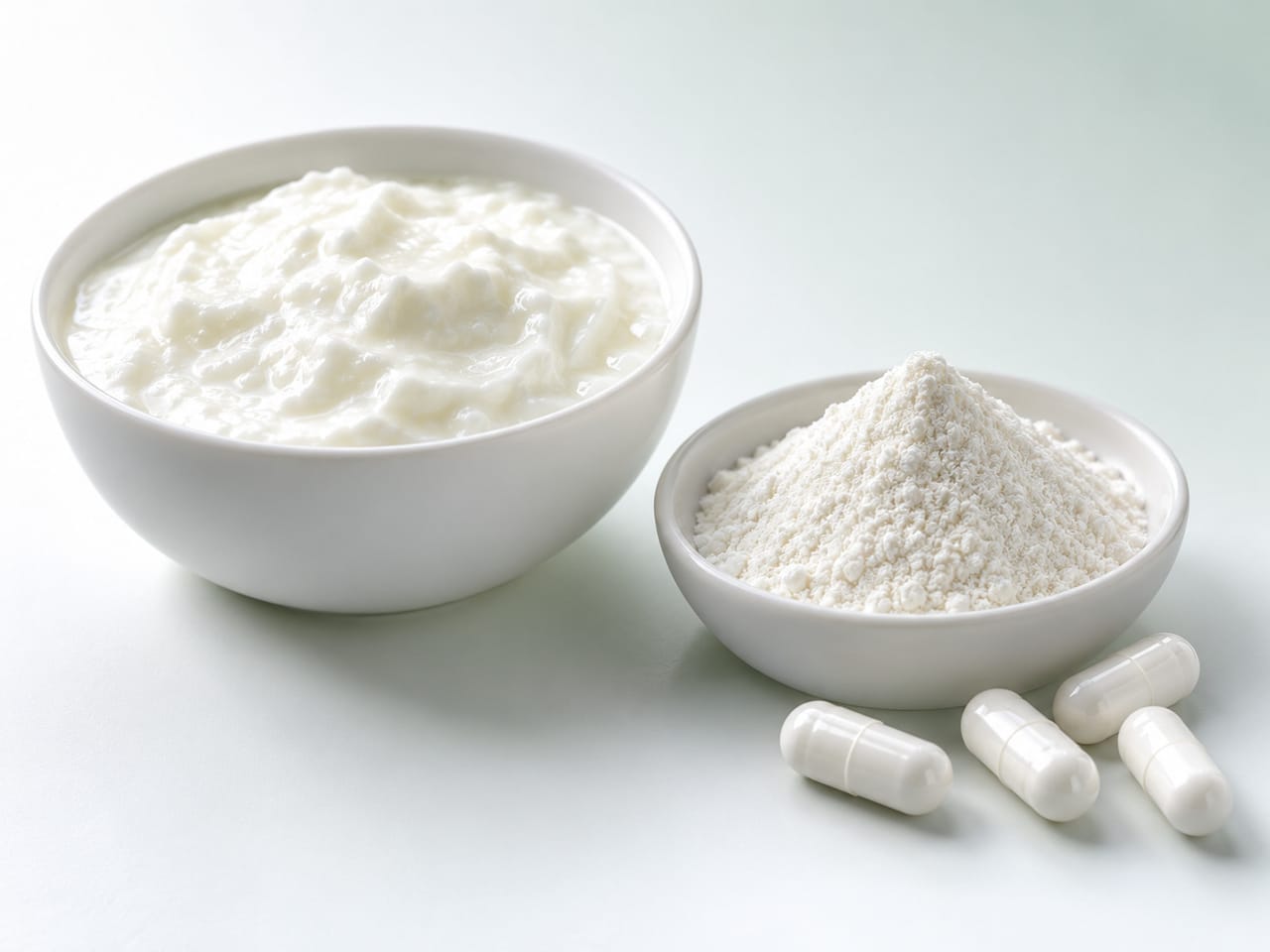
- Ingredient
- Probiotics
- Licence track
- Nutraceutical (FSSAI)
- Dosage forms
- Tablets, Capsules, Powders, Sachets, Stick packs
- FSSAI schedules
- Schedule IV, entry
- In our library
- 21 formulations
Branded ingredients used in the same ranges: Sunfiber®.
What Probiotics are
Probiotics are live microorganisms which, taken in adequate amounts, support a normal gut microflora. Our sheets use lactic acid bacteria such as Lactobacillus acidophilus, rhamnosus, plantarum and salivarius, bifidobacteria such as Bifidobacterium bifidum, lactis and longum, and the yoghurt culture Streptococcus thermophilus. They appear in digestive, skin, joint and metabolic products, sometimes alongside traditional Indian herbs, always as health supplements made under our FSSAI licence. The exact strains and counts are set for each product and confirmed at proposal stage.
Probiotics and the regulations
Our nutraceutical products are made under FSSAI’s 2016 Health Supplements and Nutraceuticals Regulations, as operationalised through FSSAI’s 2022 directions (latest re-operationalisation 30 August 2024, under Section 16(5)).
Probiotics are listed by name, as named Lactobacillus, Bifidobacterium and Streptococcus strains on its probiotic strain list, in Schedule IV (prebiotics and probiotics), entry , of the schedules set out in FSSAI’s direction of 18 October 2022 (page 66).
Probiotics belong to the FSSAI health supplement track. Permitted for nutraceutical use: it is listed by name in the schedules cited above.
Dosage forms we make Probiotics in
Tablets, Capsules, Powders, Sachets, Stick packs.
Lactobacilli and bifidobacteria lose viability with heat, moisture, oxygen and compression force, so capsules, sachets and stick-packs are the safer formats. Tablets need low compression force and a protective coat, or a spore-forming strain instead. All cultures are blended last in a low-humidity room and packed in moisture-proof laminate or alu-alu blisters.
Choosing your Probiotics grade
Probiotics are chosen at strain level, not species level: two strains of the same species can behave very differently, so brands pick named strains with their own published research and supplier documentation. Specifications state the viable count at manufacture, the count the supplier commits to at expiry, storage temperature, water activity and freedom from pathogens. Freeze-dried cultures on a carrier are the standard grade; microencapsulated or acid-resistant grades suit tablets and products sold in warm climates.
Probiotics on the label
Declared by genus, species and strain designation, using current scientific names, with the viable count stated at the end of shelf life. We check growth media and carriers for animal material before choosing the vegetarian symbol.
How brands use Probiotics
Brands use probiotics in two ways. Nutraceutical gut products such as Probiotic Daily capsules and Probiotic + FOS + Zn sachets pair them with prebiotic fibre and zinc for direct-to-consumer and pharmacy brands. Herbal-probiotic tablets such as Diabetic Care Probiotic Blend add them to a herbal base, made as health supplements under FSSAI rather than as Ayurvedic medicines, so a herbal brand can offer a gut-and-herb product in one format. Buyers include gastroenterology-facing pharmacy brands, paediatric brands, women’s health brands working on urinary wellness, and herbal wellness brands.
Our formulations with Probiotics
- UTI Support Tablets (VZ-UK-004) · Tablets
- Probiotic + FOS + Zn (VZ-DG-001) · Sachets
- Probiotic Daily (VZ-DG-002) · Capsules
- Zn + Probiotic Suspension (VZ-DG-003) · Syrups and oral liquids
- Dermatology Herbal Probiotic (VZ-SH-023) · Tablets
- Digestive Herbal Classic with Probiotics (VZ-DG-014) · Tablets
- Gastro Acidity Relief (Herbal Probiotic) (VZ-DG-015) · Tablets
- Arthritis Relief Tablet (VZ-BJ-059) · Tablets
- Chronic Joint Care (VZ-BJ-060) · Tablets
- Mental Wellness Herbal Probiotic (VZ-NB-019) · Tablets
- Diabetic Care Probiotic Blend (VZ-DC-011) · Tablets
- Slim Tea Herbal (VZ-DC-014) · Tablets
- Acidity Care (Herbal Probiotic) (VZ-DG-004) · Tablets
- Piles Relief (Herbal Probiotic) (VZ-DG-006) · Tablets
- Liver Care Advanced (Herbal Probiotic) (VZ-LC-013) · Tablets
- Kids Focus and Calm (Herbal Probiotic) (VZ-PD-052) · Tablets
- Kids Motion Sickness Relief (VZ-PD-053) · Tablets
- Acne Care (Herbal Probiotic) (VZ-SH-015) · Tablets
- Mental Wellness (Herbal Probiotic) (VZ-SN-007) · Tablets
- Anaemia and Lactation Support (Herbal Probiotic) (VZ-WH-016) · Tablets
- Herbal Blood Health Support with Probiotics (VZ-WH-017) · Tablets
Check the vitamins and minerals in the same formula with our FSSAI formulation checker, or browse all ingredients: Prishnaparni · Protein Isolate.
FAQ
Questions about Probiotics
Which dosage forms can you make Probiotics in?
Tablets, Capsules, Powders, Sachets, Stick packs. We confirm the format that suits your dose, taste and pack at proposal stage.
Is Probiotics allowed in products made in India?
Probiotics are listed by name, as named Lactobacillus, Bifidobacterium and Streptococcus strains on its probiotic strain list, in Schedule IV (prebiotics and probiotics), entry , of the schedules set out in FSSAI’s direction of 18 October 2022 (page 66).
Which of your formulations use Probiotics?
UTI Support Tablets (VZ-UK-004), Probiotic + FOS + Zn (VZ-DG-001), Probiotic Daily (VZ-DG-002), Zn + Probiotic Suspension (VZ-DG-003), Dermatology Herbal Probiotic (VZ-SH-023), Digestive Herbal Classic with Probiotics (VZ-DG-014), and 15 more listed on this page.
What is Probiotics usually combined with?
In our library they are most often paired with Bhringraj, Giloy, Pippali, Ashwagandha.
Can you work with a specific Probiotics grade or a branded ingredient?
Yes. Tell us the grade, standardisation or branded ingredient you want, such as LactoSpore or BC30 or DE111. For a branded grade we source the genuine branded ingredient from the brand owner or its distributors, with the brand’s certificate of analysis.
How fast can you make a product with Probiotics?
A formulation proposal within 48 hours, a bench sample within 10 days of a signed brief, and dispatch within 30 days of artwork and advance approval for a standard batch.
Make your Probiotics product with us.
Tell us the format and the customer; we reply with a formulation proposal within 48 hours.
Updated on